
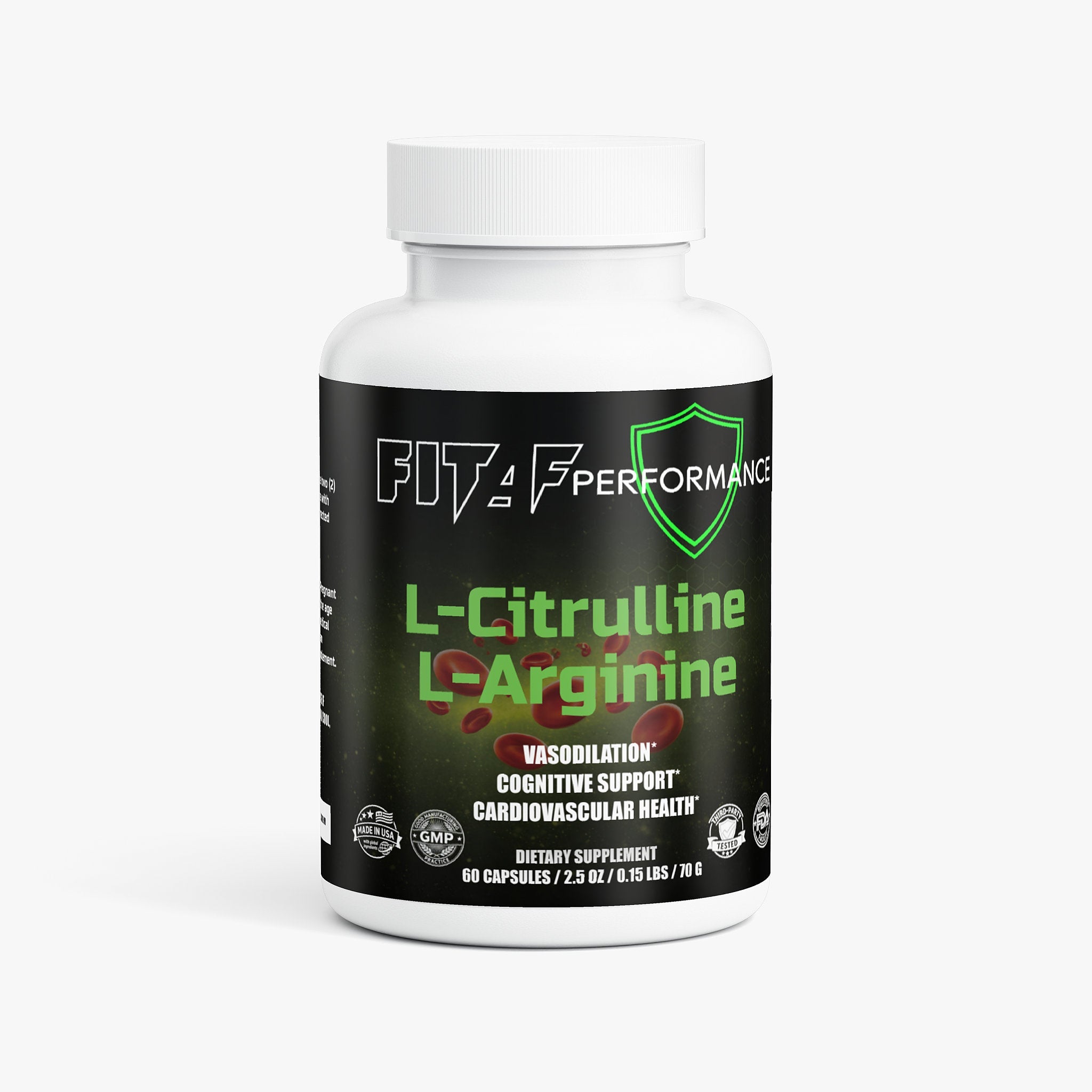
L-Citrulline is an amino acid that has become one of the most evidence-backed pre-workout ingredients available. Unlike many pump-focused supplements, it has a well-understood mechanism, solid clinical data, and meaningful effects on both exercise performance and cardiovascular health.
The Nitric Oxide Pathway
L-Citrulline is converted to L-Arginine in the kidneys, which is then converted to nitric oxide (NO) via nitric oxide synthase (NOS). NO causes vasodilation - relaxation and widening of blood vessels - which increases blood flow to working muscles. Greater blood flow means more oxygen and nutrient delivery, faster metabolic waste removal, and the characteristic "pump" effect in resistance training.
Why Citrulline Over Arginine?
A common question: why not just supplement arginine directly? The answer is that oral arginine is extensively broken down in the gut by arginase before it reaches systemic circulation, severely limiting its bioavailability. L-Citrulline bypasses this first-pass metabolism, converting to arginine in the kidneys instead. Multiple studies confirm citrulline raises plasma arginine levels more effectively than arginine supplementation itself.
Performance Evidence
A 2010 double-blind RCT published in the Journal of Strength and Conditioning Research found 8g L-Citrulline malate taken 60 minutes before training significantly increased repetitions to failure on bench press (52% more reps in the second half of training), reduced post-exercise muscle soreness by 40%, and improved subjective training performance. A 2017 meta-analysis confirmed significant improvements in strength endurance across multiple exercise modalities.
Endurance Applications
L-Citrulline also benefits endurance athletes. A 2016 study in the European Journal of Sport Science found cyclists taking L-Citrulline showed significantly greater power output and time-to-exhaustion compared to placebo, with improved oxygen efficiency.
Dosing
L-Citrulline: 6 - 8g taken 45 - 60 minutes pre-training. Citrulline malate (2:1 ratio) requires 8 - 10g to deliver equivalent citrulline. The malate component may also contribute to aerobic energy production, though evidence for this is less robust.