
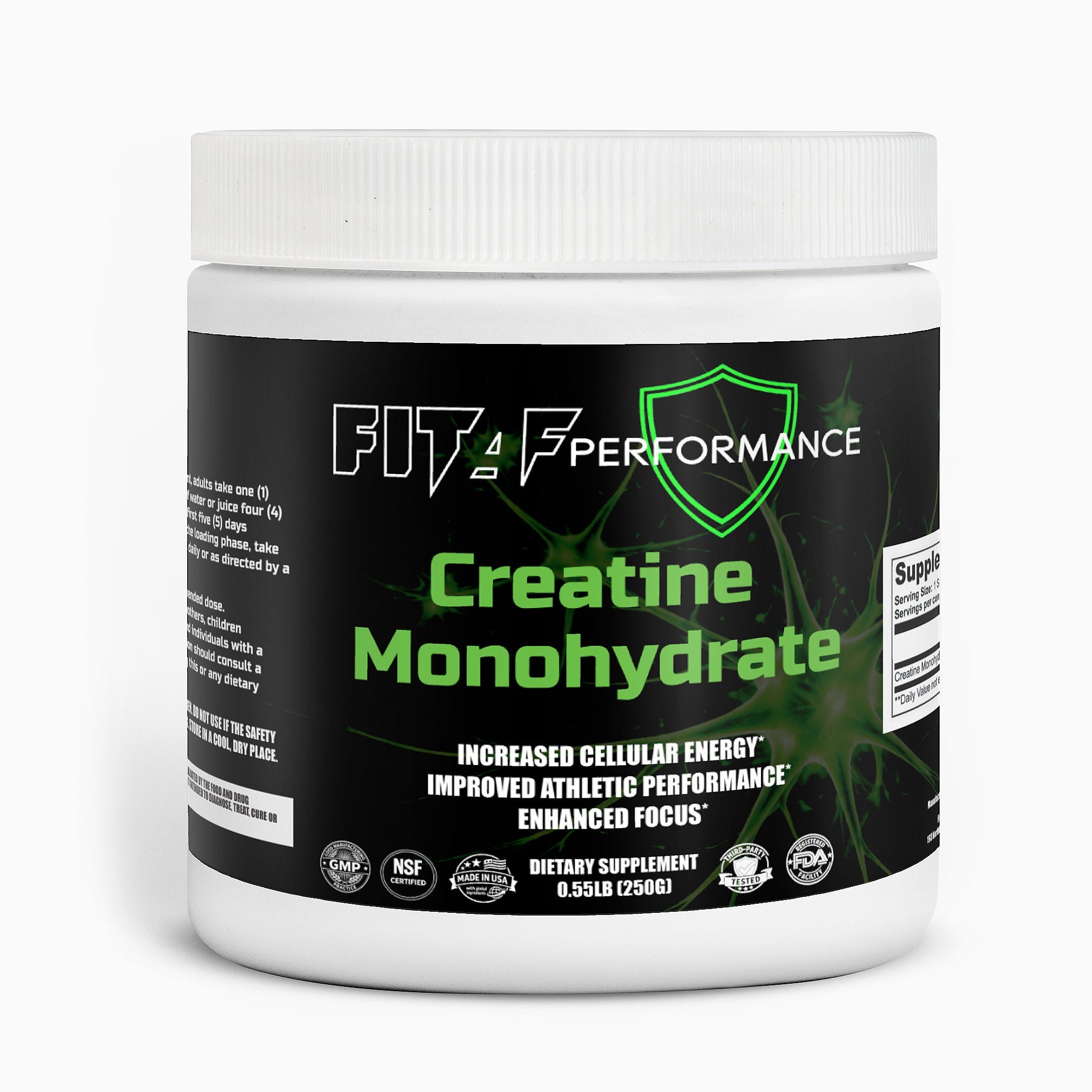
Creatine monohydrate has more research behind it than virtually any other supplement. Over 500 peer-reviewed studies spanning 30+ years confirm its safety, efficacy, and broad range of benefits. If you're serious about performance or muscle, creatine is non-negotiable.
What Is Creatine and How Does It Work?
Creatine is a naturally occurring compound found primarily in skeletal muscle. It's synthesised from three amino acids (arginine, glycine, and methionine) and also obtained from dietary meat. In muscle cells, creatine combines with phosphate to form phosphocreatine (PCr), the immediate energy substrate for ATP resynthesis during explosive efforts.
Supplementing creatine increases the total phosphocreatine pool by approximately 20 - 40%, allowing for faster ATP regeneration during high-intensity exercise. This translates to more reps, more weight, and better sprint performance - all of which drive superior adaptations over time.
Evidence Summary
A 2017 meta-analysis in the Journal of Strength and Conditioning Research analysed 22 RCTs and found creatine produced significantly greater increases in one-rep maximum strength (average +8%), muscle mass (average +1.37 kg), and power output compared to placebo. A 2003 meta-analysis in the International Journal of Sport Nutrition covering over 100 studies confirmed consistent effects across populations.
Loading vs Maintenance Protocol
Loading phase: 20g/day split into 4 × 5g doses for 5 - 7 days. This saturates muscle creatine stores faster but causes water retention and occasional GI discomfort.
Standard protocol: 3 - 5g/day consistently. Achieves full saturation within 28 days without side effects. This is what the research supports for most people.
There is no evidence that cycling off creatine is necessary or beneficial.
Timing
Post-workout creatine may offer a slight advantage over pre-workout timing, based on a 2013 study in the Journal of the International Society of Sports Nutrition. However, consistency matters far more than timing - take it whenever it fits your routine.
Forms of Creatine
Creatine monohydrate remains the gold standard. Despite heavy marketing for creatine HCl, ethyl ester, buffered creatine (Kre-Alkalyn), and others - none have shown superior efficacy in direct head-to-head trials. Monohydrate is also significantly cheaper per effective dose.
Safety Profile
Creatine monohydrate is one of the most extensively studied supplements in history. Long-term studies up to 5 years show no adverse effects on kidney or liver function in healthy individuals. The concern about kidney damage stems from creatinine levels appearing elevated in blood tests - creatinine is a metabolic byproduct of creatine, not a sign of kidney damage.
Beyond Muscle: Cognitive & Health Benefits
Emerging research suggests creatine has meaningful cognitive benefits, particularly for tasks requiring short-term memory and processing speed. A 2022 meta-analysis found creatine supplementation improved several cognitive measures, particularly in sleep-deprived individuals. The brain, like skeletal muscle, runs on ATP.